
This means that you can reduce your selling price to $12 and still cover your fixed and variable costs. Contribution margin is used to plan the overall cost and selling price for your products. It helps you in separating your fixed cost from variable cost. Further, it also helps in determining profit generated through selling your products. The resulting ratio compares the contribution margin per unit to the selling price of each unit to understand the specific costs of a particular product. The concept of this equation relies on the difference between fixed and variable costs.
Salesforce

As mentioned earlier, the contribution margin ratio can help businesses determine the lowest possible price at which sales can be made and still break even. This analysis can aid in setting prices, planning sales or discounts, and managing additional costs like delivery fees. For example, a company aspiring to offer free delivery should achieve a scale where such an offering doesn’t negatively impact profits.

Why is the contribution margin useful?
- Thus, you need to make sure that the contribution margin covers your fixed cost and the target income you want to achieve.
- As a business owner, you need to understand certain fundamental financial ratios to manage your business efficiently.
- Shaun Conrad is a Certified Public Accountant and CPA exam expert with a passion for teaching.
- For example, it can help a company determine whether savings in variable costs, such as reducing labor costs by using a new machine, justify the increase in fixed costs.
- It depends on the industry, but higher CM Ratios are generally better because more revenue is available for fixed costs and profit.
- On the other hand, a low ratio suggests a lower contribution margin.
It tells what percentage of https://maistor-kz.com/equity-multiplier-formula-what-is-it-examples/ sales revenue is available to cover fixed cost and generate profit. Gross margin subtracts only cost of goods sold, while contribution margin subtracts all variable costs—including variable selling expenses, delivery, and sometimes labor. While the Ratio is a useful tool, it’s not without limitations. It doesn’t account for fixed costs, so it’s not a measure of overall profitability.
How to Calculate Contribution Margin Ratio?
- We’ll next calculate the contribution margin and CM ratio in each of the projected periods in the final step.
- The contribution margin ratio represents a company’s revenue minus variable costs, divided by its revenue.
- We will also discuss the Weighted Average Contribution Margin Ratio.
- However, they will play an important part in calculating the net income formula.
- In the Dobson Books Company example, the contribution margin for selling $200,000 worth of books was $120,000.
- On the other hand, the gross margin metric is a profitability measure that is inclusive of all products and services offered by the company.
Gross margin is the difference between revenue and the cost of goods sold (COGS). On the other hand, contribution margin refers to the difference between revenue and variable costs. At the same time, both measures help analyze a company’s financial performance. However, an ideal contribution margin analysis will cover both fixed and variable cost and help the business calculate the breakeven. A high margin means the profit portion remaining in the business is more. It may turn out to be negative if the variable cost is more that the revenue can cover.
Indirect materials and indirect labor costs that cannot be directly allocated to your products are examples of indirect costs. Furthermore, per unit variable costs remain constant for a given level of production. Thus, the level of production along with the contribution margin are essential factors in developing your business. Now, it is essential to divide the cost of manufacturing your products between fixed and variable costs. The difference between fixed and variable costs has to cm ratio formula do with their correlation to the production levels of a company.

Contribution Margin Ratio Formula
Accordingly, the Contribution Margin Per Unit of Umbrella would be as follows. Furthermore, the variable costs can be either direct or indirect. Direct Costs are the costs that can be directly identified or allocated to your products. For instance, direct material cost and direct labor cost are the costs that can be directly allocated with producing your goods. So, you should produce those goods that generate a high contribution margin. As a result, a high contribution margin would help you in covering the fixed costs of your business.
Step-by-Step Calculation Guide
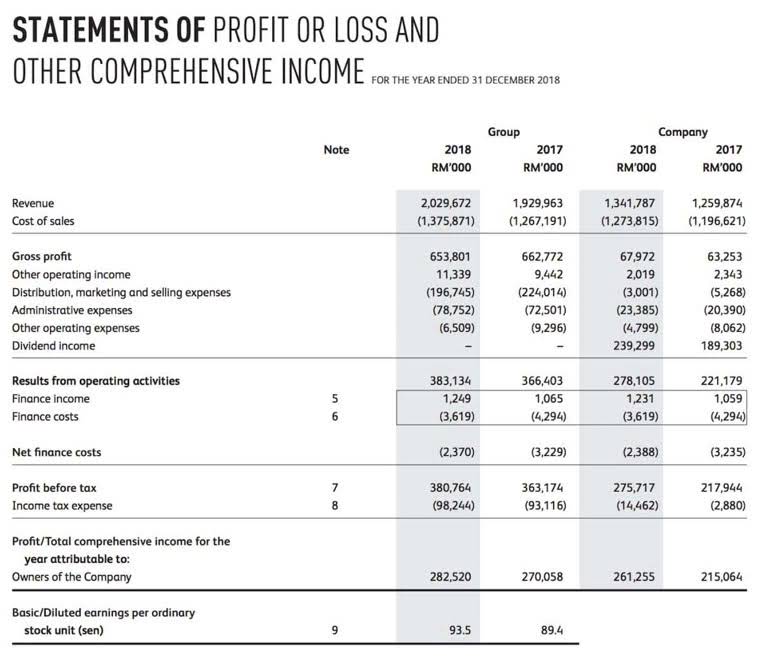
We’ll start with a simplified profit and loss statement for Company A. This involves selling more of the products with higher contribution margins. Using the provided data above, we can calculate the price per unit by dividing the total product revenue by the number of products sold. On the other hand, the gross margin metric is a profitability measure that is inclusive of all products and services offered by the company. Therefore, the contribution margin reflects how much revenue exceeds the coinciding variable costs.
Knowing how to calculate contribution margin allows us to move on to calculating the contribution margin ratio. To get the ratio, all you need to do is divide the contribution margin by the total revenue. Some managers prefer to work with the contribution margin ratio rather than the unit contribution margin. The CM ratio is Outsource Invoicing particularly valuable in situations where trade-offs must be made between more dollar sales of one product versus more dollar sales of another. Generally speaking, when trying to increase sales, products that yield the greatest amount of contribution margin per dollar of sales should be emphasized. The fixed costs of $10 million are not included in the formula, however, it is important to make sure the CM dollars are greater than the fixed costs, otherwise, the company is not profitable.