where does notes payable go on a balance sheet

What Are Notes Payable? Definition With Examples

They characterize a dedication to make common principal and interest where does notes payable go on a balance sheet funds, which affects cash circulate and general liquidity. While they improve debt, notes payable can present needed capital for operations or investments that generate future income. Proper management of those obligations helps maintain a wholesome monetary position and creditworthiness. Current liabilities are monetary obligations that an organization expects to settle within one 12 months or within its normal working cycle. These are short-term debts that arise from day-to-day enterprise operations and are sometimes paid using current property. Widespread examples include accounts payable, short-term debt, accrued bills like wages payable, and unearned income.

where does notes payable go on a balance sheet

Notes Payable = Principal Amount Borrowed + Accrued Curiosity − Funds Made

A zero-interest-bearing observe (also generally recognized as non-interest bearing note) is a promissory notice on which the rate of interest is not explicitly acknowledged. When a zero-interest-bearing notice is issued, the lender lends to the borrower an quantity less than the face value of the observe. At maturity, the borrower repays to lender the quantity equal to face vale of the notice. Thus, the difference between the face value of the note and the quantity lent to the borrower represents the curiosity charged by the lender. In this case the note payable is issued to exchange an quantity because of a supplier presently shown as accounts payable, so no cash is concerned.

Assets

In the realm of business financing, notes payable characterize a important element that companies leverage for managing money flow, investing in progress opportunities, and ensuring operational stability. These short-term debt instruments are basically promises made by a enterprise to pay a particular sum to the holder of the observe on a predetermined date, typically with interest. The short time period notes payable are classified as short-term obligations of an organization as a result of their precept amount and any curiosity thereon is usually repayable inside one 12 months interval.

Company Overview

where does notes payable go on a balance sheet

When considering the financing choices available to a business, notes payable typically emerge as a outstanding selection due to their structured nature and glued https://accounting-services.net/ terms. In Distinction To different forms of debt, corresponding to lines of credit or business paper, notes payable represent a proper agreement with specific reimbursement schedules, interest rates, and maturity dates. This formality may be both a boon and a bane, depending on the corporate’s financial strategy and money circulate needs. For instance, a business looking for a predictable debt structure may favor notes payable for their clear-cut terms, which may facilitate easier monetary planning and budgeting. From the attitude of a creditor, notes payable symbolize a form of funding or loan to a different entity, usually accompanied by curiosity, which offers a return on the capital lent. For the debtor, it’s a necessary means of securing funds for various purposes, such as purchasing tools, financing projects, or simply managing money flow.

Written By: Tetiana Sitiugina-babiuk

It additionally lets you observe financial transactions like accounts payable and accounts receivable. Once More, you utilize notes payable to report particulars that specify details of a borrowed amount. With accounts payable, you use the account to report liabilities you owe to vendors (e.g., buy supplies from a vendor on credit). To illustrate, let’s think about a hypothetical company, TechGear Inc., which issues a notice payable for $100,000 at an rate of interest of 5% to finance the acquisition of latest manufacturing tools. Should price range $5,000 for curiosity over the yr and make sure that it has $100,000 at the finish of the term to repay the principal. By doing so, TechGear not solely improves its production capability but also maintains its financial stability.

  • Persevering With with the above example, let’s assume the mortgage firm utilized to purchase that automobile is from Financial Institution of America.
  • The interest could be recorded periodically as an expense and a liability until paid.
  • If the enterprise makes use of the equipment as collateral, it means that if they fail to make payments, the lender may take possession of the equipment.

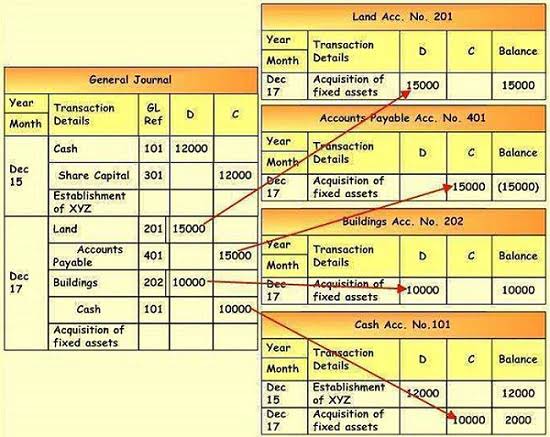
In the above instance, the principal quantity of the observe payable was 15,000, and interest at 8% was payable in addition for the time period of the notes. Typically notes payable are issued for a fixed amount with interest already included within the amount. In this case the enterprise will truly obtain cash lower than the face worth of the notice payable. In notes payable accounting there are a number of journal entries wanted to report the observe payable itself, accrued interest, and eventually the reimbursement.

how to find discount amortization

Bond Amortization Calculator

The choice of discount price significantly impacts the present value, with higher charges leading to lower current values and vice versa. The amortization of the discount not solely impacts the revenue statement but in addition affects the stability sheet. As the discount is amortized, the carrying quantity of the observe receivable increases, moving closer to its face value.

What Are Amortized Loans?

  • And for corporations issuing a bond, bond amortization can show to be significantly beneficial.
  • Concurrently, a credit score is applied to the discount on bonds payable account, which reduces the low cost and will increase the carrying worth of the bond on the steadiness sheet.
  • The amortization process of bond low cost takes place using the efficient rate of interest technique.
  • This accretion of value over time is an integral part of the bond’s complete return and influences an investor’s decision-making process.
  • “Book Value” represents the Par Amount of a maturity plus/minus the outstanding premium/discount quantity on the maturity.

Nevertheless, it should be noted that Lopez Co. is meant to scale back the $13,000 low cost throughout the lifetime of the bond instrument, such that the stability within the low cost account is zero until the maturity date. Nevertheless, it have to be noted that Lopez Co. is meant to reduce the $100,000 low cost across the life of the bond instrument, such that the balance in the discount account is zero till the maturity date. Any loans that are marketed as having «no closing prices» typically have unfavorable factors embedded in them the place the worth of originating the mortgage is paid by way of the next fee of curiosity on the loan. This fee ought to be disclosed in your Loan Estimate (LE) and Closing Disclosure (CD). Negative points, that are also known as rebate factors or lender credits, are the other of mortgage points.

The longer the homeowner pays a better rate of interest the more they’re going to compensate the financial institution with that higher fee of interest. Finally they will end up paying extra curiosity than they otherwise would have. The most common fee is 1%, although the utmost mortgage origination fee is 3% on Certified Mortgages of $100,000 or extra. In the examples proven in the table above financing the points would take the break even point from 49 months to 121 months for the loan with 1 level & a hundred and twenty months for the mortgage with 2 points.

When it involves amortizing bond premiums and discounts, there are several strategies that affect how the amortization is calculated and acknowledged over time. Each technique introduces small variations that can influence the effective interest rate and the bond’s carrying worth. A bond is offered at a premium when its coupon rate is larger than prevailing rates of interest, that means investors are willing to pay more than the bond’s face worth. The premium quantity represents the extra amount above par that the bondholder pays to receive greater interest payments. Over the life of the bond, this premium is steadily amortized (reduced), that means it is spread out over the bond’s remaining life. And, as noted earlier, it’s typically auditors’ preferred method to amortize the discount on bonds payable.

how to find discount amortization

Since the coupon price is paid semi-annually, it implies that each six months, a coupon of $25 ($1,000 x  5/2) will be paid. Also, the yield to maturity is said in annual phrases, so semi-annually the yield to maturity is 1.945% (3.89% / 2). Amortization of bond discount is a important accounting concept that impacts each the issuer’s financial statements and the investor’s understanding of a bond’s worth. It involves the gradual recognition of the distinction between the bond’s face value and its issued price over the lifetime of the bond. This methodology calculates premium/discount amortization for every maturity individually and combines them into a full amortization schedule for the whole problem. The low cost on bonds payable is handled as a contra-liability account, which means it reduces the bonds payable balance on the balance sheet.

Is A 22-year-old Scholar Eligible To Use For A Credit Score Card?

When market interest rates rise, for any given bond, the fastened coupon price is lower relative to other bonds available in the market. It makes the bond more https://www.online-accounting.net/ unattractive, and it is why the bond is priced at a reduction. For example, in the first interval, the bond low cost amortization is $5,430, and the journal entry is Interest expense $305,430, Bond discount $5,430, and Financial Institution $300,000.

how to find discount amortization

What’s Amortization Of A Bond?

This methodology applies to various loans, including personal loans, auto loans, and mortgages, offering debtors with a structured reimbursement plan. Creating an amortization schedule permits borrowers to understand how every payment contributes to paying off the loan and reducing the excellent stability over time. The means of recording the amortization of a bond discount includes a debit and a credit score entry within the company’s accounting records. The debit is made to the curiosity expense account, reflecting the increase in value over the coupon payment due to the amortization.

These discounts are usually expressed in phrases like “2/10, web 30,” that means the client can deduct 2% from the invoice quantity if payment is made inside 10 days; otherwise, the total amount is due in 30 days. For instance, on a $1,000 bill, a 2% cash discount would scale back the cost to $980 if settled inside the low cost interval. In accounting, cash reductions are recorded as a reduction in sales income or as a reduction expense, relying on the accounting methodology used.

Chartered accountant Michael Brown is the founder and CEO of Double Entry Bookkeeping. He has worked how to find discount amortization as an accountant and advisor for more than 25 years and has constructed monetary models for all types of industries. He has been the CFO or controller of both small and medium sized firms and has run small companies of his own. He has been a manager and an auditor with Deloitte, a giant 4 accountancy firm, and holds a degree from Loughborough University. These calculations are applied individually to every maturity inside a series when using the Efficient Interest Rate methodology.

These discounts can enhance cash flow and cut back the danger of bad debts, making them a valuable tool for managing accounts receivable. The constant yield technique amortizes the bond premium by multiplying the acquisition value by the yield to maturity at issuance and then subtracting the coupon interest. When market interest rates decrease, for any given bond, the fixed coupon price is higher relative to different bonds in the market. It makes the bond extra attractive, and it is why the bond is priced at a premium.

Purchases Ledger Control Accounts Cambridge CIE IGCSE Accounting Revision Notes 2021

Usually, when a payment is recorded it will debit/credit the relevant control account with the other side of the posting going to the bank nominal. Because in this situation, the bank is not being used, we can simply journal between the two control accounts. C) Prepare a Statement altering the total of the sales ledger balance to agree with the new sales ledger control account balance. The information posted to the accounts payable control account and the source of that information are shown in the table below. The main purpose of the PLCA is to provide a summary account that reflects the total amount owed to all suppliers, simplifying the process of tracking and reconciling accounts payable within the general ledger. When an accountant is executing a transaction on the balance sheet of a company, debits and credits are used to record which accounts are increasing and which are decreasing.

When you have finished, check that credits equal debits in order to ensure the books are balanced. This means listing all accounts in the ledger and balances of each debit and credit. Once the balances are calculated for both the debits and the credits, the two should match. In a small business the accounts can be kept in one accounting general ledger and a trial balance can be extracted from that ledger.

The process is tedious since the accountant must conduct a thorough calculation to ensure that totals on different accounts are matched. Companies may consider using accounting software to perform reconciliation, although they still need the services of accountants. Enter the postings to the control accounts as above, choosing the supplier/customer in the ‘Account’ column. This control account summarizes payroll-related transactions, including salaries payable, tax withholdings, and other deductions. Likewise, the other side of the journal will be visible in the sales ledger account, also clearing off the debtor balance.

It indicates the total amount a business entity owes to its suppliers at a particular point in is purchase ledger control account a debit or credit time. Therefore, it is a “short-term liability” for the business entity and forms part of the balance sheet. As these times are closely related to the «purchases and trade payables», students often confuse and record them in the P L Control Account. Purchases ledger control account is generally prepared at the end of the financial year or «whenever» it is required to check the arithmetical accuracy of the individual trade payable accounts. This control account summarizes all transactions related to amounts owed by customers. It reflects the total of individual customer balances recorded in the Sales Ledger.

The Cash & Petty Cash Books

  • The total balance of the Purchase Ledger represents the total amount of money the business owes to its suppliers and is reflected as accounts payable on the balance sheet.
  • The amount of storage that you purchased is yours for the length of the subscription, even if you decide to cancel it.
  • Please note that some information might still be retained by your browser as it’s required for the site to function.
  • Each day, individual purchases should be posted to the vendor’s account in the accounts payable subsidiary ledger.
  • You’ll be automatically charged on a monthly basis for all remaining payments due for that season.

The subsidiary ledgers are now part of the double entry system, and to extract a trial balance it would be necessary to collect information on the balances from each of the ledgers. In order to avoid this situation the general ledger maintains control accounts for each of the subsidiary ledgers. The accounts payable control account or purchases ledger control account, is an account maintained in the general ledger used to record summary transactions relating to accounts payable. The balance on the accounts payable control account at any time reflects the amount outstanding and due to suppliers by the business for credit purchases.

The Purchases Ledger Control Account (PLCA), also known as the Creditors’ Ledger Control Account, is a key component of a company’s general ledger. This summary account consolidates the total amount owed to suppliers and other creditors for goods or services purchased on credit. It is used to streamline accounting processes and ensure efficient tracking and reconciliation of accounts payable.

If you make a mistake in your purchases journal, it is important to correct it as soon as possible. You may also want to consider using a software program or online tool to help you track your purchases. As per the golden rules of accounting (for personal accounts), liabilities are credited. The balances are aggregated periodically, then posted into the purchase ledger control account.

A. Supplier A Account

  • A purchase ledger is where accountants record all financial transactions related to the purchase of goods or services by a business during a specific period.
  • The Purchase Ledger is structured as a T-account for each supplier, with credits representing purchases (amounts owed to suppliers) and debits representing payments made.
  • The mnemonic for remembering this relationship is G.I.R.L.S. Accounts which cause an increase are Gains, Income, Revenues, Liabilities, and Stockholders’ equity.

The subsidiary accounts receivable and payable ledgers have only one sided entries and therefore do not self balance. As only a section of the accounting system is self balancing such a system if sometimes referred to as a sectional balancing system. In contrast an accounting system in which all ledgers are individually balanced is referred to as a self balancing system. Other names used for the purchases journal are the purchases book, purchases daybook, and the credit purchases journal. Control accounts are an element of the double-entry bookkeeping method and are used to check the totals found in a company’s balance sheet. As this control account contains the summarized information of all the trade payables accounts in the purchases ledger, it is also called as «Total Trade Payables Account»(«Total Creditors Account»).

Accounting software such as QuickBooks, FreshBooks, and Xero are useful for balancing books since such programs automatically mark any areas in which a corresponding credit or debit is missing. The articles and research support materials available on this site are educational and are not intended to be investment or tax advice. All such information is provided solely for convenience purposes only and all users thereof should be guided accordingly. The balance in this list is compared with the balance in the general ledger accounts payable account. The use of accounts receivable and accounts payable control accounts creates an accounting system where only the general ledger is self balancing.

Importance of Purchases Ledger Control Accounts

If you purchase NFL Sunday Ticket through a monthly installment payment plan, you’ll be charged your first payment at the time of purchase, and you won’t be able to cancel your membership for the season you purchased. You’ll be automatically charged on a monthly basis for all remaining payments due for that season. In accounting, there is a term that describes the purchase of balancing the control account with purchase ledgers — reconciliation. This process requires experience and skills since the accountant must understand how to conduct a thorough investigation of the different amounts.

To begin, enter all debit accounts on the left side of the balance sheet and all credit accounts on the right. Consider which debit account each transaction impacts and whether it ultimately increases or decreases that account. It can help you track the expenses of your business, which can be useful for tax purposes. It can also help you keep an accurate inventory of the products and services you offer.

Creditors’ Ledger Control Account

The total balance of the Purchase Ledger represents the total amount of money the business owes to its suppliers and is reflected as accounts payable on the balance sheet. Balance in sales ledger control account is the balance of debtors at the year end and balance in purchases ledger control account is balance of creditors. Interest on overdue accounts charged from customers and refunds to customers for overpayments by them are shown on the debit side of sales ledger control account. Accounting experts recommend reconciling the purchase ledger control account monthly to ensure it reflects the same balance as the creditor account. The creditor account reflects the individual balances outstanding to the company’s suppliers.

Finally, at the end of the month, a list of the individual subsidiary accounts is created. This list is often called the accounts payable trial balance (or a schedule of accounts payable). Purchase Ledger Control Account is also referred to as a “Trade Creditors Control Account”.

It means that whenever an accountant makes a change in a ledger, it is synchronized with the supplier’s account. It should be noted that in the above example, the subsidiary ledger and the purchases journal are independently completed from the source documents. By adopting this procedure any differences between the purchases journal, which is used to post the control account, and the subsidiary ledger will be highlighted when the control account reconciliation is carried out. In this example, the business uses a cash control account in the general ledger, and the cash book does not form part of the double entry system, and is simply a listing of the cash payments. The two main transaction types for accounts payables are credit invoice purchases transactions, and the payment of cash to suppliers. Prepare the purchases ledger control account for the year ended 29 February 2024.

Purchases Ledger Control Account is a summary account which checks the arithmetical accuracy of the Purchases Ledger. It enables us to see at a glance whether the general ledger balance for the purchases ledger agrees with the total of all the individual trade payable accounts held within the purchases ledger. The accounts payable subsidiary ledger does not form part of the double entry bookkeeping process. In double entry bookkeeping, debits and credits are entries made in account ledgers to record changes in value resulting from business transactions. A debit entry in an account represents a transfer of value to that account, and a credit entry represents a transfer from the account.

Monthly installment payment plans are not available for viewers in all U.S. territories. Most viewers will see the option to purchase NFL Sunday Ticket in up to 12 monthly payments. However, viewers in Colorado, Maine, Utah, and Wisconsin will see the option to purchase in only up to 4 monthly payments. Monthly installment payment plans give you the option to break up your season payment into monthly increments rather than paying the entire cost upfront. Eligible viewers can purchase using a monthly installment plan when signing up from their computer or web browser on a mobile device.

At the end of the month, the amount column in the journal is totaled, and this amount is posted as a debit in the general ledger purchases account. Purchase Ledger Control Account (PLCA) is a summarized ledger of all the trade creditors of the entity. This Control Account typically looks like a “T-account” or a replica of an Individual Trade Payable (Creditor) account. Since it indicates the total trade payables, it shows a credit balance and the modern rule of accounting cannot be broken under any circumstances. They must also ensure that the amount listed in the control account is the total of each of the amounts owed by a business to each supplier.

Cancel storage on your Google One membership

He has been the CFO or controller of both small and medium sized companies and has run small businesses of his own. He has been a manager and an auditor with Deloitte, a big 4 accountancy firm, and holds a degree from Loughborough University. If you purchased a storage subscription under the old pricing plan, you can renew your subscription until you choose to upgrade or until your payment information expires. If you own multiple accounts, you can’t transfer content between accounts on Google Play.

This may be daily, weekly, or monthly, depending on the type of business you run and the products and services you offer. Therefore, the amount column represents a credit to accounts payable and a debit to purchases at the full invoice price. A purchases journal is a special journal used to record any merchandise purchased on account. The entries in this journal are made based on the invoice received from the supplier on the purchase date. You can see that the transactions which increase the balance of PLCA are credited & decrease the balance are debited. A control account exists for both creditors and debtors and is used to ensure that there are no errors in the ledgers (that any sub-ledgers match up with the general ledger).

tangible book value meaning

What’s Tbv Per Share? Definition & Method Valuesense

There are monetary metrics that permit traders to assess a company’s capability to supply its buyers with an acceptable return on their investment. Investors, particularly institutional investors, make use of various metrics to evaluate companies’ monetary well being and profitability. One such metric is Tangible Book Worth Per Share (TBVPS), which provides insights right into a company’s worth by assessing its tangible property on a per-share foundation. Tangible book worth per share (TBVPS) plays a vital function in evaluating the monetary health and potential value of firms, notably for institutional traders.

Obotu has 2+years of professional expertise in the business and finance sector. She enjoys writing in these fields to educate and share her wealth of data https://www.online-accounting.net/ and experience. This means that for 2020, AAL has a adverse tangible guide value of -$1,772 million.

For occasion, a pharmaceutical firm with useful patents could have a relatively low TBV regardless of its important market capitalization. Therefore, relying solely on historical costs can distort the true picture of a company’s financial well being. Conversely, assets which have become obsolete may be carried at inflated values on the stability sheet. One of essentially the most significant limitations of TBV is its backward-looking nature. It depends on historical data from the balance sheet and doesn’t incorporate expectations about an organization’s future performance.

tangible book value meaning

Tips On How To Analyze Casino Shares: A Information For Savvy Buyers

Nevertheless, despite these limitations, institutional buyers proceed to search out worth in utilizing TBVPS as a device for investment analysis. First, understanding TBVPS helps traders estimate the liquidation value of a company. In instances where a firm faces chapter or insolvency, tangible book value serves as a vital benchmark to gauge its potential value in the occasion of asset liquidation. By taking this per-share strategy, TBVPS presents a more exact evaluation of shareholders’ interest and potential returns.

tangible book value meaning

Guide worth refers again to the ratio of stockholder equity to the variety of shares excellent. It takes into account only the accounting valuation, which is not at all times an correct reflection of the present market valuation, or of what might be obtained throughout a sale. Aside from belongings associated to the production of a product, any tools used to create the product may be included as well. This can include any instruments or machinery required to complete manufacturing, as nicely as any actual estate owned and used for the purposes of production.

  • A low P/TB ratio may indicate undervaluation relative to tangible assets, presenting a possible buying opportunity.
  • This measure excludes intangible property, corresponding to intellectual property, goodwill, and patents, which don’t have a readily measurable resale value.
  • This is significantly lower than their Total Shareholders’ Equity of $5,000,000, highlighting the influence of intangible belongings on the corporate’s overall valuation.
  • One such metric is Tangible Book Value Per Share (TBVPS), which represents the value of a company’s tangible assets on a per-share foundation.
  • It represents the whole value of tangible assets that can be utilized to cowl liabilities or spend cash on new alternatives.
  • Tangible guide value refers to the total value of a company’s tangible assets minus its liabilities.

Why Tbv Is More Conservative

It allows traders to make informed selections when choosing between potential investments. By evaluating market value to TBVPS, buyers can assess whether or not the market is overvaluing or undervaluing an organization primarily based on its tangible property. Additionally, TBVPS can offer a security web in the occasion that a company experiences monetary misery or bankruptcy. Firms with a high TBVPS relative to their market worth might offer extra draw back safety for traders.

One such metric that usually flies underneath the radar, yet provides a wealth of data, is the Tangible Guide Worth Per Share (TBVPS). This financial indicator can act as a compass, guiding traders through the advanced panorama of corporate valuation. In this article, we’ll delve into the definition of TBVPS, discover its method, and focus on why it is a critical software for anybody seeking to make knowledgeable investment decisions.

Subtract any liabilities associated to these tangible assets, corresponding to depreciation or amortization expense. These non-cash expenses scale back the worth of the asset over time but don’t impact its actual value. Understanding tips on how to analyze tangible book value and evaluating it with market worth are essential abilities for traders. The major difference between tangible book worth and guide worth is the inclusion of intangible property. Book worth contains tangible book value meaning both tangible and intangible assets, whereas tangible guide worth excludes intangibles. Uncover the nuances between tangible book worth and e-book value to enhance your organization analysis abilities and make knowledgeable funding selections.

Traders often have a glance at Tangible Book Worth on a per-share basis to evaluate a company’s stock worth relative to its tangible property. This calculation offers insight into whether a stock is trading above or below its TBV, helping traders identify probably overvalued or undervalued stocks. The Tangible E-book Worth metric remains a vital a part of fundamental analysis, offering a clear, conservative measure of a company’s asset worth. For traders and analysts, it serves as a tangible “safety web,” highlighting a company’s core bodily belongings that might probably be liquidated to cowl liabilities. Worth to Tangible Guide Value (PTBV) is a valuation ratio that measures the market value of an organization relative to its tangible guide value. It provides buyers with a fast snapshot of whether or not a company’s inventory is overvalued or undervalued.

tangible book value meaning

In inventory valuation, TBV helps in figuring out undervalued shares, providing a benchmark beneath which a company’s inventory value is deemed attractive. Divide the net tangible book value by the number of current excellent shares to get the Tangible E-book Worth Per Share (TBVPS). The resulting figure represents the worth of each share if the corporate had been to liquidate its belongings.

In simpler phrases, it tells us what the company is price if it have been to liquidate its physical assets. A key limitation of TBVPS is its incapability to account for intangible assets, which are sometimes important parts of recent companies. The value of intangibles can considerably impression a company’s total price; subsequently, relying solely on TBVPS might not present an entire understanding of the business’s financial position.

how do you calculate quarterly taxes

Estimated Tax Payments: How It Works, Deadlines

how do you calculate quarterly taxes

We break down top picks like Everlance, MileIQ, and Triplog to help you choose the right one. If you’re unsure, it can be helpful to consult with a tax professional who can provide guidance based on your individual situation. Rely on our experts and let doola take care of your tax tracking, payments, and financial management.

Tools and Resources for Calculating and Filing Quarterly Taxes

For additional information, refer to Publication 505, Tax Withholding and Estimated Tax. You may send estimated tax payments with Form how do you calculate quarterly taxes 1040-ES by mail, or you can pay online, by phone or from your mobile device using the IRS2Go app. You can also make your estimated tax payments through your online account, where you can see your payment history and other tax records. Business owners and freelancers are required to pay taxes directly to the IRS, rather than have them withheld from their paychecks. This form of payment is called ‘Estimated Taxes’ and must be made four times a year.

Schedule C

  • No matter what you do for work, annualizing your income can take the uncertainty out of quarterly taxes.
  • If you are in business for yourself, you generally need to make estimated tax payments.
  • The annualized income installment method, though, lets you pay less tax when you earn less money.
  • For 2024, gross income from farming is the total of the following amounts.

It’s recommended to recalculate quarterly, especially if you have variable income or significant life changes. The IRS requires you to make payments on quarterly estimated taxes when you’re making money from any source that isn’t subject to regular withholding. Small business owners, independent contractors, and freelancers all have to pay quarterly taxes if they expect to owe more than $1,000 in a year. Corporations have to make estimated payments if they expect to owe more than $500 in a year. If you miss your quarterly estimated tax payment, you should send the check as soon as you are able. That’s because interest will accrue on the underpayment over time.

Estimated taxes

  • Likewise, if you had significant lottery or other prize winnings, you may also be subject to paying estimated quarterly taxes.
  • To calculate your self-employment tax, you will need to use Schedule SE (Form 1040), which can be found on the IRS website.
  • In addition to these payment methods, it’s important to keep detailed records of your payments.
  • Quarterly taxes, also known as estimated taxes, are tax payments made by individuals and businesses to the IRS for federal withholding every quarter.
  • This person is also personally responsible for all business debts and liabilities.
  • For an S Corp owner specifically, estimated taxes cover the tax due on the remaining business profit or the portion of your business income that isn’t your salary.

Finally, you determine that the required annual payment is $46,839, the smaller of the two. Tax if excluding foreign earned income or excluding or deducting foreign housing. If you expect to claim the foreign earned income exclusion or the housing exclusion or deduction on Form 2555, use Worksheet 2-6 to figure your estimated tax.. The instructions for Form 1040-ES include a worksheet to help you figure your estimated tax.

What do you need to track in order to pay?

how do you calculate quarterly taxes

If you are in business for yourself, you generally need to make estimated tax payments. Estimated tax is used to pay not only income tax, but other taxes such as self-employment tax and alternative minimum tax. If you’ve followed the steps above, you should now have a good https://blog.teuauto.com.br/w2-contract/ idea of what your business earned and spent during the quarter. To calculate your estimated taxes, simply add up your total income and divide it by four. So if you are going to make it in the world of business, you’ll need to know all about calculating quarterly taxes (estimated).

how do you calculate quarterly taxes

You can still choose to make quarterly payments so you’re not faced with a huge bill at tax time. No, business expenses are not deducted directly from your quarterly tax payments. However, you can deduct eligible business expenses when calculating your overall tax liability on your annual tax return. The annualized income installment method is a way of splitting up estimated quarterly tax payments for people whose income fluctuates throughout the year. The IRS requires certain taxpayers to make quarterly tax payments throughout the year as they earn their income. This ensures that the IRS collects tax payments during the year, similar to withholdings, rather than receiving a lump sum payment at the end of the year.

You’ll find all possible adjustments to income in Part II of your Schedule 1, part of your normal balance Form 1040. Once you subtract them from your net income, you’ll have your AGI. As you can see, these periods nest into each other, like a Russian doll.

how do you calculate quarterly taxes

To be eligible, your payroll periods (weekly, biweekly, etc.) must have been the same since the beginning of the year. The following rules apply in determining whether you are required to furnish a new Form W-4 to your employer. See How To Get Tax Help at the end of this publication for information about getting these publications and forms. To pay self-employment tax, you must have a Social Security number (SSN) or an individual taxpayer identification number (ITIN).

myob to xero direct conversion

How to transfer data from MYOB to Xero with multi currency

As a rule of thumb, If it’s reconciled in MYOB, it should be reconciled in Xero. This includes all invoices, including all line details and all contacts or items. If you’ve used payroll, all payroll transactions should also be updated to the general ledger, and all employees should be set up for you, ready to go. The end of the financial year is often seen as the best time to convert from MYOB to Xero, but you can make the switch anytime.

List of Software which we can migrate to ClearBooks

This is to ensure the balances and transactions are managed correctly from MYOB to Xero. You’ll save a lot of time and effort if you collaborate with a dedicated financial advisory firm or trusted accountant on your switch from MYOB to Xero. At Liston Newton, we can guide you through the key steps involved in converting MYOB or Reckon client files to Xero. In most cases, data conversion includes migration; this is our specialty and will assist you to modernize your accounts and data management. Migrating to XERO from SAASU eases services delivery for most companies. It helps to integrate inventory management and payroll processing.

  • You need to ensure that the version of your file is handy with Xero.
  • They want to transfer from MYOB Essentials to Xero and they would like to have all the data for the past year transferred into Xero.
  • A structured process ensures fewer surprises and sets your business up for success on day one.
  • We are highly confident in recommending their Xero conversion service.
  • We prioritize data integrity, minimize downtime, and provide ongoing support throughout the migration process.

I had previously checked th conversion partners none of them convert Myob Essentials to Xero. I am also not certain that Xero tools import the date from Myob Essentials. We are conversion specialists who assess every situation and handle it uniquely. Allow us to work on the migration process for a well-done job. To add Quickbooks data to new or an already existing XERO organization is a complex task. A new organization has to be created and then the file uploaded to XERO.

myob to xero direct conversion

This approach makes it easier for startups and SMEs to control budgets while still having access to powerful accounting tools. For many companies, moving from MYOB Advanced to Xero is not just a technology upgrade. It’s a strategic choice that supports growth, flexibility, and better decision-making. MYOB Advanced can feel complex and heavy, especially for businesses that want easy access to real-time data without relying on IT teams. The appeal of cloud-based accounting software is different for each business and you should identify what you’re trying to achieve by changing to Xero in advance.

Post-Migration Tasks: Ensuring Accuracy and Stability

  • Our team specialises in moving from MYOB Advanced to Xero, ensuring your data is accurate, your setup is correct, and your team is supported every step of the way.
  • Converting from Sage to QuickBooks enhances your business operations.
  • When comparing the two platforms, it’s clear why so many firms are moving from MYOB Advanced to Xero.
  • To overcome this, your conversion specialist may choose to bring all the historical data across in your base currency (we are in Australia, so AUD).
  • But once we transfer the same data to Xero, your Xero P&L will show an extra value in your under unrealised foreign currency gains/loss.

Embrace the power of the cloud and unlock new levels of efficiency for your business with Xero. The MYOB file (uncompressed/unzipped) has to be less than 250mb in size. Journal, transaction or open balance to a header account (Trade Debtors/Trade Creditors). My accountant is not XERO savvy and has been involved in this process. He has reached a point in his knowledge where he can not help us.

Work with a conversion partner

A larger business with 15 employees would have a monthly fee of $80. This monthly fee tends to be slightly cheaper than MYOB AccountRight Live Plus monthly subscription of $92 per month. Work myob to xero direct conversion with your financial advisor or account partner to put together a collaborative plan for your Xero conversion.

Premium Support

We believe we have reached a point where we need to employ an accountant with Xero knowledge to fix these mistakes. Does anyone have any advice on the best way to import data from MYOB Essentials into Xero. We can convert from MYOB essentials to Xero, let us know if we can assist you in any way. If you’re planning to move your business over to Xero, you probably have a lot of questions. The whole process may seem a little bit daunting, and you may be tempted to throw your hands in the air and give up before you’ve even begun. Improve your skills as a business owner and learn what you need to do to take your business to the next level.

The beauty of Xero is that it never rolls over, so once you’ve migrated everything over from MYOB, you’ll have all your transactions from the start of trading in one place. You will love this function when you work with Xero because you can completely forget that you are dealing with multiple currencies. You will record your transactions in their actual currency and Xero will take care of all the exchange rates behind the scenes. If you’re ready to take the next step, Switch My Books can help. Our team specialises in moving from MYOB Advanced to Xero, ensuring your data is accurate, your setup is correct, and your team is supported every step of the way.

Using this method, it is best to have the start date as the beginning of your organisation’s financial year. MMC even went the extra mile to help us with some conversion which were not part of their services. Great job overall, will continue using them for future migration. All you need to do is give your files to us, and we will revert with them all converted to Xero. We understand that the information that you provide to us is business secrets, so we ensure that only the people who are authorised will be handling your data.

With the right preparation, a clear process, and the right support, you can transfer your accounts and start using Xero with confidence. Many businesses prefer the end of a financial quarter or year. This makes reporting easier because you can start fresh in Xero without splitting reporting periods. Selecting a clean cut-off date also helps you compare trial balances before and after moving from MYOB Advanced to Xero.

You need a conversion partner who makes the process run smoothly.

And paying expense, managing inventory, processing payrolls, managing customers and suppliers and whatnot, every work can be easily carried and completed by this software. Your work gets super-simplified as you work on an online platform. Account-Consultant offers the best accounting & bookkeeping outsourcing services in Australia & New Zealand.

cm ratio formula

Contribution margin Definition, formula & example

cm ratio formula

This means that you can reduce your selling price to $12 and still cover your fixed and variable costs. Contribution margin is used to plan the overall cost and selling price for your products. It helps you in separating your fixed cost from variable cost. Further, it also helps in determining profit generated through selling your products. The resulting ratio compares the contribution margin per unit to the selling price of each unit to understand the specific costs of a particular product. The concept of this equation relies on the difference between fixed and variable costs.

Salesforce

cm ratio formula

As mentioned earlier, the contribution margin ratio can help businesses determine the lowest possible price at which sales can be made and still break even. This analysis can aid in setting prices, planning sales or discounts, and managing additional costs like delivery fees. For example, a company aspiring to offer free delivery should achieve a scale where such an offering doesn’t negatively impact profits.

cm ratio formula

Why is the contribution margin useful?

  • Thus, you need to make sure that the contribution margin covers your fixed cost and the target income you want to achieve.
  • As a business owner, you need to understand certain fundamental financial ratios to manage your business efficiently.
  • Shaun Conrad is a Certified Public Accountant and CPA exam expert with a passion for teaching.
  • For example, it can help a company determine whether savings in variable costs, such as reducing labor costs by using a new machine, justify the increase in fixed costs.
  • It depends on the industry, but higher CM Ratios are generally better because more revenue is available for fixed costs and profit.
  • On the other hand, a low ratio suggests a lower contribution margin.

It tells what percentage of https://maistor-kz.com/equity-multiplier-formula-what-is-it-examples/ sales revenue is available to cover fixed cost and generate profit. Gross margin subtracts only cost of goods sold, while contribution margin subtracts all variable costs—including variable selling expenses, delivery, and sometimes labor. While the Ratio is a useful tool, it’s not without limitations. It doesn’t account for fixed costs, so it’s not a measure of overall profitability.

How to Calculate Contribution Margin Ratio?

  • We’ll next calculate the contribution margin and CM ratio in each of the projected periods in the final step.
  • The contribution margin ratio represents a company’s revenue minus variable costs, divided by its revenue.
  • We will also discuss the Weighted Average Contribution Margin Ratio.
  • However, they will play an important part in calculating the net income formula.
  • In the Dobson Books Company example, the contribution margin for selling $200,000 worth of books was $120,000.
  • On the other hand, the gross margin metric is a profitability measure that is inclusive of all products and services offered by the company.

Gross margin is the difference between revenue and the cost of goods sold (COGS). On the other hand, contribution margin refers to the difference between revenue and variable costs. At the same time, both measures help analyze a company’s financial performance. However, an ideal contribution margin analysis will cover both fixed and variable cost and help the business calculate the breakeven. A high margin means the profit portion remaining in the business is more. It may turn out to be negative if the variable cost is more that the revenue can cover.

Indirect materials and indirect labor costs that cannot be directly allocated to your products are examples of indirect costs. Furthermore, per unit variable costs remain constant for a given level of production. Thus, the level of production along with the contribution margin are essential factors in developing your business. Now, it is essential to divide the cost of manufacturing your products between fixed and variable costs. The difference between fixed and variable costs has to cm ratio formula do with their correlation to the production levels of a company.

cm ratio formula

Contribution Margin Ratio Formula

Accordingly, the Contribution Margin Per Unit of Umbrella would be as follows. Furthermore, the variable costs can be either direct or indirect. Direct Costs are the costs that can be directly identified or allocated to your products. For instance, direct material cost and direct labor cost are the costs that can be directly allocated with producing your goods. So, you should produce those goods that generate a high contribution margin. As a result, a high contribution margin would help you in covering the fixed costs of your business.

Step-by-Step Calculation Guide

We’ll start with a simplified profit and loss statement for Company A. This involves selling more of the products with higher contribution margins. Using the provided data above, we can calculate the price per unit by dividing the total product revenue by the number of products sold. On the other hand, the gross margin metric is a profitability measure that is inclusive of all products and services offered by the company. Therefore, the contribution margin reflects how much revenue exceeds the coinciding variable costs.

Knowing how to calculate contribution margin allows us to move on to calculating the contribution margin ratio. To get the ratio, all you need to do is divide the contribution margin by the total revenue. Some managers prefer to work with the contribution margin ratio rather than the unit contribution margin. The CM ratio is Outsource Invoicing particularly valuable in situations where trade-offs must be made between more dollar sales of one product versus more dollar sales of another. Generally speaking, when trying to increase sales, products that yield the greatest amount of contribution margin per dollar of sales should be emphasized. The fixed costs of $10 million are not included in the formula, however, it is important to make sure the CM dollars are greater than the fixed costs, otherwise, the company is not profitable.

bond issue costs

Debt Issuance Fees Overview, Accounting Treatment, Amortization

Amortizing bond issuance costs is a nuanced process that requires careful attention to detail. The goal is to allocate these costs over the life of the bond, ensuring that the financial impact is spread evenly across the periods in which the bond is outstanding. This method aligns the expense recognition with the benefits derived from the bond issuance, providing a more accurate representation of a company’s financial performance. Debt issuance costs are recorded as a direct deduction from the face amount of the debt liability on the balance sheet. They are amortized over the life of the debt using the effective interest method, with the amortization recognized as interest expense.

Bond Issuance Costs: The Price of Borrowing: Exploring Bond Issuance Costs

  • That makes 10-year fixed mortgages relatively expensive, as lenders’ costs of hedging at those maturities are much higher.
  • Trade & invest in stocks, ETFs, options, futures, spot currencies, bonds & more with Interactive Brokers today.
  • Let’s consider an example of a company issuing bonds and incurring debt issuance costs.
  • The choice between GAAP and IFRS can significantly affect a company’s financial statements.

Under GAAP, bond issuance costs are typically recorded as a deferred charge on the balance sheet. This means that instead of expensing these costs immediately, they are capitalized and then amortized over the life of the bond. This approach aligns the recognition of the costs with the period in which the bond is outstanding, providing a more accurate reflection of the financial impact over time. The amortization process involves systematically reducing the deferred charge through periodic expense recognition, which is often done using the effective interest method. This method ensures that the expense is matched with the interest expense of the bond, maintaining consistency in financial reporting. Debt issuance fees refer to expenses that the government or public companies incur in selling bonds.

BAR CPA Practice Questions: Concepts and Principles for Government-Wide Financials

Software tools like QuickBooks and SAP can facilitate the amortization process by automating the calculations and ensuring compliance with accounting standards. These tools can generate amortization schedules, track the carrying amount of the bond, and provide detailed reports that help in financial analysis and decision-making. Utilizing such software not only streamlines the process but also reduces the risk of errors, ensuring that the financial statements are accurate and reliable. State and local governments incur various costs and fees in conjunction with publicly offered bond transactions. This Best Practice provides an overview of the types of costs and fees that an issuer can expect to pay in a typical bond transaction. This information can help the company make informed decisions about whether to issue bonds or explore alternative financing options.

What next for interest rates?

Issuing long-term bonds represents an important source of financing for many companies. The process of issuing bonds to the public takes a considerable amount of time. bond issue costs Approval is needed from the Securities and Exchange Commission, a prospectus must be written, and underwriting of the securities might be arranged. The journal entry will debit debt issue expense and credit debt issue cost.

Understanding the Legal Landscape

Printing costs, though often smaller in scale compared to underwriting and legal fees, are still a necessary expense in the bond issuance process. These costs cover the production of physical documents, such as bond certificates, prospectuses, and other related materials. While the digital age has reduced the reliance on printed materials, certain regulatory and investor requirements still necessitate physical documentation.

GAAP vs. IFRS Treatment

bond issue costs

The complexity of the bond issuance, such as whether it involves multiple jurisdictions or unique financial structures, can influence the magnitude of these fees. Accurate accounting for legal fees is essential for maintaining transparency and regulatory compliance. Issuing bonds is a common method for companies to raise capital, but it comes with its own set of financial intricacies. One critical aspect that often requires careful consideration is the accounting treatment of bond issuance costs.

  • For a $10,000 loan two hundred to six hundred dollars in fees will not greatly affect the income statement results.
  • In the latter case, it can make sense to separately disclose the remaining amount of debt issuance costs in the footnotes that accompany the financial statements, if this amount is material.
  • As a result of this transaction, the company’s controller records a bond liability in the net amount of $4,765,000, which is the bond proceeds minus the issuance costs.
  • Bonds are a type of debt instrument in which an investor loans money to a borrower, typically for a period of time.

Trade & invest in stocks, ETFs, options, futures, spot currencies, bonds & more with Interactive Brokers today. For the past 52 years, Harold Averkamp (CPA, MBA) hasworked as an accounting supervisor, manager, consultant, university instructor, and innovator in teaching accounting online. For the past 52 years, Harold Averkamp (CPA, MBA) has worked as an accounting supervisor, manager, consultant, university instructor, and innovator in teaching accounting online.

Preferred stocks always pay a dividend, but this is optional for common stocks. You can deduct interest payments on bonds from your taxable income, but dividends are not deductible. Bonds and preferred stock do not participate in the growth of the company, because they offer fixed returns. Common stocks give shareholders a right to benefit from earnings through dividends or higher stock prices.

This allows a reader of financing information to understand how much was incurred for the original closing cost for that particular loan. Accounting is the process of recording economic activity and reporting this information in a timely and accurate manner. Basically, the information should be fairly stated in the financial reports. Treasury managers, on the other hand, might focus on the structure of the bond. They might opt for callable bonds, which allow the issuer to redeem the bonds before maturity if interest rates drop, thus refinancing the debt at a lower cost. Entering the market during a period of high volatility can lead to unfavorable credit spreads, reflecting in the interest rates they end up paying.

Utilizing robust accounting software can aid in tracking and reporting these costs, ensuring compliance with regulatory standards and enhancing the reliability of financial statements. Registration fees are payments made to regulatory bodies to register the bond issuance. These fees are calculated based on the total value of the bonds being issued and are necessary for the legal sale of the bonds to the public. The registration process ensures that the bond issuance meets all regulatory requirements, providing protection to investors and maintaining market integrity. Companies must account for these fees as part of the overall issuance costs, as they directly affect the net proceeds from the bond sale.

For example, consider a corporation like XYZ Corp that decides to issue bonds to fund a new manufacturing plant. They appoint a renowned investment bank as the underwriter and a legal firm to handle the documentation. After a thorough analysis, they receive an ‘A’ credit rating, indicating a strong capacity to meet financial commitments. The underwriters set a competitive yield based on market benchmarks and investor feedback. The marketing efforts highlight XYZ Corp’s strong market position and growth prospects, attracting a diverse group of institutional investors.

accounting research bulletin no 43

U S. GAAP Codification of Accounting Standards Guide by AccountingINFO.com

They aimed to enhance the credibility of the accounting profession by promoting ethical practices and professional judgment. By offering clear guidelines, ARBs helped accountants navigate complex transactions and economic events, thereby fostering greater transparency and accountability. This, in turn, contributed to restoring public trust in financial reporting, which had been severely eroded during the economic turmoil of the 1930s. Topics covered by the bulletins included recommendations on United States Treasury tax notes, corporate accounting for ordinary stock dividends, intangible assets, and more. According to the very first bulletin, published in September 1939, the committee was created to implement an unbiased set of principles that would govern corporate accounting. The introduction read that accounting «must be judged from the standpoint of society as a whole—not from that of any one group of interested parties.»

A FASB-sponsored derivatives implementation group began meeting in early September and is expected to develop even more detailed interpretations. The FASB’s emerging issues task force (EITF) and the SEC accounting staff may weigh in with still more guidance in time. The SEC remained active, adopting in 1940 Regulation S-X, which governed the form and content of financial statements filed with the Commission.

Accounting research bulletins definition

Explore the historical evolution, impact, and future directions of Accounting Research Bulletins on financial reporting and international practices. Many pages of Statement no. 133 are devoted to examples of how the standard applies in certain contexts. However, accountants must carefully read and understand all 245 pages to ensure that the statement is adopted properly, a formidable challenge even for those relatively few accountants with a good understanding of derivatives. MASTER GAAP GUIDE” FROM CCH43, Restatement and Revision of Accounting Research Bulletins, was the last such compilation, and it was issued nearly half a century ago. Recommendations by the American Institute of Certified Public Accountants on how accountants ought to treat certain facts or items.

Treasury posts preliminary list of jobs eligible for no tax on tips

These pronouncements were issued by the Committee on Accounting Procedures of the American Institute of Certified Public Accountants during the years 1953 to 1959. And actions taken by companies to sell their products internationally, protect against a multitude of financial and other risks, adjust to new technology and react to other developments often raise new accounting issues. CREEPING COMPLEXITY Regrettably, this level of complexity of generally accepted accounting principles has become more the norm than the exception.

  • The Committee on Accounting Procedure was the first private sector organization tasked with setting accounting standards in the United States.
  • Legal aspect is feasible because the needs of documents and licensing requirements that are met…
  • With the permission of the AICPA, the full text of Accounting Research Bulletins has been posted on the website of the J.D.
  • It was run by the American Institute of Accountants, now known as the American Institute of Certified Public Accountants.

We and our partners process data to provide:

This bulletin was particularly impactful for large conglomerates, as it provided a standardized approach to presenting their financial results. These were the bulletins published in the U.S. before 1960, which stated the generally accepted accounting principles. Be the first to know when the JofA publishes breaking news about tax, financial reporting, auditing, or other topics. I would recommend ARB accountants to anyone whowants to have a seamless process of Bookkeeping andmanagement accounts. The APB sought to build on the foundation laid by ARBs, but with a more rigorous and systematic methodology. Unlike the Committee on Accounting Procedure, which issued bulletins on an ad-hoc basis, the APB aimed to develop a cohesive set of principles that could be universally applied.

However, the SEC strongly influenced accounting practice through periodic meetings with the CAP, as well as through informal rulings and private conferences with registrants. He focuses primarily on financial accounting and consulting for auto dealerships, commercial businesses, and nonprofit organizations. As a senior manager, he specializes in providing consulting and financial accounting services to construction, real estate development, manufacturing, and professional services firms. One example of an Accounting Research Bulletin (ARB) is ARB No. 43, “Restatement and Revision of Accounting Research Bulletins,” which was issued in June 1953. They can be found in the Accounting Standards Codification, which became effective after September 2009, and which is the single source of U.S. ARB definition and meaningRecommendations by the American Institute of Certified Public Accountants on how accountants ought to treat certain facts or items.

But perhaps the best explanation for creeping complexity of accounting standards is that business itself has become so much more complex. Derivative financial instruments and securitization transactions, for example, are inherently complicated and may not be adequately covered by general accounting principles. This bulletin recognized that estimates are an inherent part of financial reporting and provided guidance on how to account for changes in these estimates. By clarifying that changes in estimates should be accounted for prospectively, ARB No. 45 helped prevent the manipulation of financial results and ensured that financial statements remained reliable and transparent.

  • Many pages of Statement no. 133 are devoted to examples of how the standard applies in certain contexts.
  • Unlike the Committee on Accounting Procedure, which issued bulletins on an ad-hoc basis, the APB aimed to develop a cohesive set of principles that could be universally applied.
  • As the business environment continued to evolve, so too did the need for more robust and comprehensive accounting standards.
  • A two-thirds majority vote by the CAP was necessary to issue an Accounting Research Bulletin (ARB).

Where to Find Standards When You Have a Citation

It also could result in fewer pronouncements if those that dealt only with very narrow issues were not issued. Rather than accede to the many requests for answers to all possible situations, the FASB should ask itself whether more detail will result in better financial reporting. The answer could be a resounding no if the complexity of new accounting rules outpaced the ability of well-intentioned professional accountants to keep up with and understand them or discouraged appropriate professional judgment. One additional explanation FASB often cites for complicated standards is that corporations lobby aggressively for desired financial reporting outcomes, such as smoothing the effects of transactions on periodic net income. ARBs were not merely technical documents; they represented a concerted effort to bring order and uniformity to a fragmented field. Each bulletin tackled specific accounting issues, ranging from revenue recognition to inventory valuation, providing practitioners with a framework to ensure consistency and comparability in financial statements.

accounting research bulletin no 43

Accounting Principles Board replaced the Committee of Accounting Procedures and in later years it got replaced by the Financial Accounting Standards Board (FASB). Accounting Research Bulletins are the documents issued Committee on Accounting Procedure (CAP), which was part of the American Institute of Certified Public Accountants (AICPA). The CAP would issue 51 ARBs during its existence, several of which survive in today’s FASB’s Codification, and four Accounting Terminology Bulletins. The Accounting Research Bulletins were not binding rules in themselves; they were more like explanations of the existing rules. Emerging technologies such as blockchain, artificial intelligence, and machine learning are poised to revolutionize financial reporting and auditing. These technologies offer the potential for greater accuracy, efficiency, and transparency, but they also present new challenges that must be addressed through rigorous research and standard-setting.

Legal aspect is feasible because the needs of documents and licensing requirements that are met… The main reason for the increase in the volume and complexity of accounting guidance is that many auditors, corporations and regulators ask for it. While most business people and senior partners of audit firms support general principles in theory, they often ask for much more detailed standards in practice. In addition to the length and complexity of Statement no. 133—or more likely because of them—FASB had all the Big Five accounting firms help it prepare an educational course on the accounting research bulletin no 43 new standard.

accounting research bulletin no 43

Issued in 1953, it consolidated and revised previous bulletins, providing a comprehensive framework that addressed a wide array of accounting issues. This bulletin was instrumental in standardizing practices related to inventory valuation, depreciation, and the classification of current and non-current assets. By offering detailed guidance on these topics, ARB No. 43 helped reduce inconsistencies and improved the comparability of financial statements across different entities. This could result in less-detailed statements if third- or fourth-level issues are not specifically addressed, as they are in many standards at present.

It’s Time To Simplify Accounting Standards

This shift was driven by the recognition that piecemeal guidance was insufficient to address the growing complexity of financial reporting. The APB’s work culminated in the issuance of 31 Opinions, which provided more detailed and prescriptive guidance on a wide range of accounting issues, from lease accounting to the treatment of extraordinary items. Before this bulletin, there was no uniform method for accounting for income taxes, leading to significant variations in financial reporting. ARB No. 48 introduced the concept of interperiod tax allocation, which required companies to recognize the tax effects of temporary differences between financial and taxable income.

If such all-in-one-place guidance were put together, FASB or other groups doing the job might even find that there are quite a few standards that have outlived their usefulness and can be eliminated. SIMPLICITY AS A STRATEGY In 1992 FASB preliminarily addressed many of the concerns of constituents through a three S program—for selectivity, speed and simplicity. The guidance is effective for inventory costs incurred during fiscal years beginning after June 15, 2005, but earlier application is permitted for costs incurred during fiscal years beginning after November 23, 2004.

In 1949, the CAP reconsidered developing a framework but instead codified and updated its first 42 ARBs. ERI Economic Research institute compiles the most robust salary, cost-of-living, and executive compensation survey data available, with current market data for more than 1,000 industry sectors. It is hard to speak highly enough of their attention to detail, first class service and faultless production of our monthly financial management accounts. FASB issued Statement no. 151 , Inventory Costs ( /st/index.shtml ), an amendment of Accounting Research Bulletin (ARB) no. 43, chapter 4. While the Bulletins were not binding on American Institute of CPAs members, the Securities and Exchange Commission (SEC) typically required their use by corporations under their jurisdiction. Foreign exchange is a service to exchange foreign currency, given to people or company who wants to buy or sell a currency by money changer.

In 1959, the AICPA replaced the Committee on Accounting Procedure with the Accounting Principles Board (APB), which took over the role of setting accounting standards in the United States. The CAP was replaced by the Accounting Principles Board, which in turn was later replaced by the Financial Accounting Standards Board (FASB). The FASB continues to issue accounting standards on a variety of topics, most of which are aligned with the standards issued by the International Accounting Standards Board (IASB). The first was an American Institute of Accountants (AIA) 1936 statement Examination of Financial Statements by Independent Public Accountants, dealing with some accounting principles, though oriented primarily to auditing. The AIA’s 1938 Statement of Accounting Principles, authored by three academicians, was intended to be a survey and statement of best practices.